


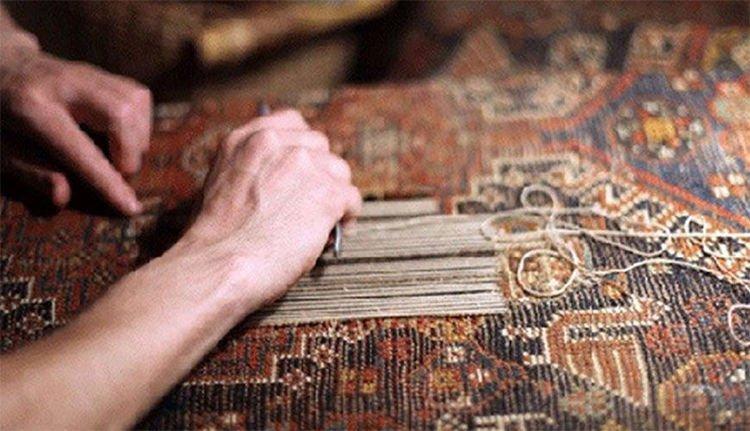
Rugs, among the most important decorative items for living spaces, come in a wide variety of colors and styles to suit every taste and decor. Handwoven rugs, considered among the finest options, have long been favored for their ability to add a touch of elegance to homes and offices. Handcrafted rugs, which also include antique pieces, have always been a focal point thanks to their traditional and regional patterns.
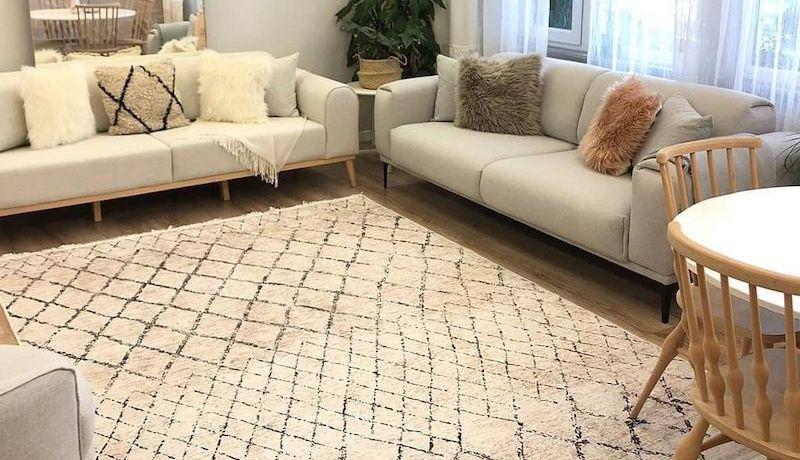
Each symbol on a handwoven rug is called a motif, while the overall appearance within the frame is referred to as a pattern. Large and spacious rug models stand out for their use in living rooms and other rooms. In contrast, kilim-style rugs—a type of handwoven rug—are typically preferred for kitchens, balconies, and entryways. Adding an authentic atmosphere to the home, these diverse handmade rug models serve as indispensable decorative elements in many spaces.
How Are Handwoven Rugs Made?
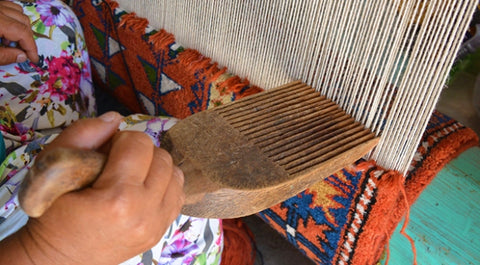
Handwoven rugs are produced as a result of a time-consuming, intensive process and require significant effort, setting them apart from machine-made rugs. The fabric is first processed on a loom. The loom used essentially functions as a large frame. The upper part of the loom is designed to be movable, and the threads passed through it are pulled tight. The next step—and the one requiring the most skill—is tying knots in the threads.
In our country, two types of knots are used: the Turkish knot and the Persian knot. The Turkish knot is popular for its durability, and the motifs look quite attractive on woven rugs. The Persian knot, on the other hand, is more suitable for floral and plant motifs. Regardless of which style is used to begin, the chosen knot style is maintained until the rug is completed. The pile threads that give the rug its texture are called “warp.” Warps are made from various materials, such as silk, wool, and fiber.
The type of scissors used until the handwoven rug takes shape is quite important. The same pair of scissors must be used until the rug is finished. Once the weaving process is complete, the raw rug is first finished with a kilim weave and then with a chiti weave. In the final stage, the handwoven rug is washed, completing the weaving process. This results in a variety of captivating handwoven rug designs, each destined to grace the most beautiful corner of your home.
How Can You Tell if a Rug Is Handwoven?
There are many differences between hand-woven rugs and machine-made rugs. The knots on the back of a hand-woven rug are proof that it was made by hand. These knots exhibit an asymmetrical pattern and are easily recognizable because they are tied after every loop. On the other hand, the pattern on the front of the rug is also visible on the back. Since machine-made rugs are produced by automated machines, they lack knot marks, and the loop patterns are distinct. You can also easily distinguish between them by examining the rugs’ motifs.
With advances in technology, machine-woven rugs are now capable of reproducing any given design exactly. Hand-woven rugs, however, are created by weaving each motif individually; therefore, they do not have the uniform, orderly appearance of machine-woven rugs. Today, there are also machine-made rugs produced using patterns and yarn types similar to those of handwoven rugs. To distinguish them, simply look at the back. The knots that are clearly visible on handwoven rugs are absent in these types of rugs, and the back is coated with latex.
There are also varieties of both handwoven and machine-made rugs and kilims that can be used on both sides. Since checking the back alone is not sufficient to distinguish between hand-woven and machine-made rugs, it is also necessary to examine the pattern and check the type of weave. Thanks to the high-quality natural fibers used in woven rugs, they offer both an organic and attractive appearance.
For detailed information on selecting the right, high-quality rug, you can read the article “How to Choose a High-Quality Rug.”
How to Clean a Hand-Woven Rug?
Handwoven rugs add a touch of elegance to any space with their high-quality and stylish appearance. However, to maintain this appearance, they must be cleaned at regular intervals. If not cleaned, the knots will wear down and begin to unravel over time. To avoid this and ensure the rug lasts for many years, it is recommended to use shampoos specifically formulated for hand-woven rugs during cleaning. Scrubbing too vigorously or applying harsh chemicals to the rug can be damaging. It can also cause the organic dyes to bleed, resulting in a faded color. In contrast, a gentle cleaning process ensures that hand-woven rugs and kilims remain as good as new.
If a stain appears on a handwoven rug, it is crucial to clean it immediately without delay. The first step should be to rinse the area with clean water and blot it with a soft towel. After the initial rinse, create a lather using natural soap or specially formulated products to completely remove the stain. Spread the lather and wipe along the grain of the fibers, taking care not to apply excessive pressure. To remove excess water from the rug, wipe from the top down toward the bottom. After cleaning, the rug must be dried in a cool, clean place out of direct sunlight.
How to Wash a Hand-Woven Rug?
Washing a hand-woven rug periodically is important to ensure it retains its quality and appearance for many years. Methods such as dry cleaning or water-based vacuuming can cause the rug to wear out and its vibrant colors to fade over time. Additionally, woven rugs should be aired out regularly to keep them as free as possible from moisture and dampness.
Since natural dyes are generally used in handwoven wool rugs and kilims, their appearance remains vibrant and lustrous at all times. However, using chemical detergents or bleach for cleaning causes these natural dyes to bleed. For this reason, natural soaps must always be used.
Hand-woven rugs should be aired out on a balcony or in a well-ventilated area, rotating them periodically, before washing. Then, the natural cleaning agents should be lathered in a suitable bucket, and the rug should be gently wiped down. After the process, the rug must be dried in a cool area. Hand-woven rugs left damp can develop an unpleasant odor. Additionally, rugs that are not completely dry and remain damp should not be used.
Shaking hand-woven rugs is incorrect because it causes the rug to stretch. Instead of shaking, it is recommended to sweep the rug in the direction of the easily discernible silk or wool strands.
How to Store Handwoven Rugs?
Just as important as the use of rugs—one of the most essential accessories in living spaces—is how they are stored when not in use. Before storing a rug, it must be swept or wiped down as specified. If the rug has fringes, they should not be combed with a comb or similar brushes. Combing can damage the rug and cause the fringes to stretch and break.
Although it is quite common to store handwoven kilims or rugs by folding them, rolling them up is a better option. Storing them this way significantly prevents deformation. Additionally, leaving the rug in cold or hot areas can damage its fibers. Therefore, it is recommended to store it at room temperature.
It is common practice to place naphthalene near textiles being stored. This method can also be applied to handmade rugs. Mothballs or soap-like scented materials placed next to a rug that has been rolled up not only keep the rug smelling fresh but also prevent issues such as rot. Even if all necessary precautions are taken for unused handwoven rugs, they must be taken out and aired out at regular intervals. This prevents the rug’s natural fibers from becoming deformed by allowing them to breathe.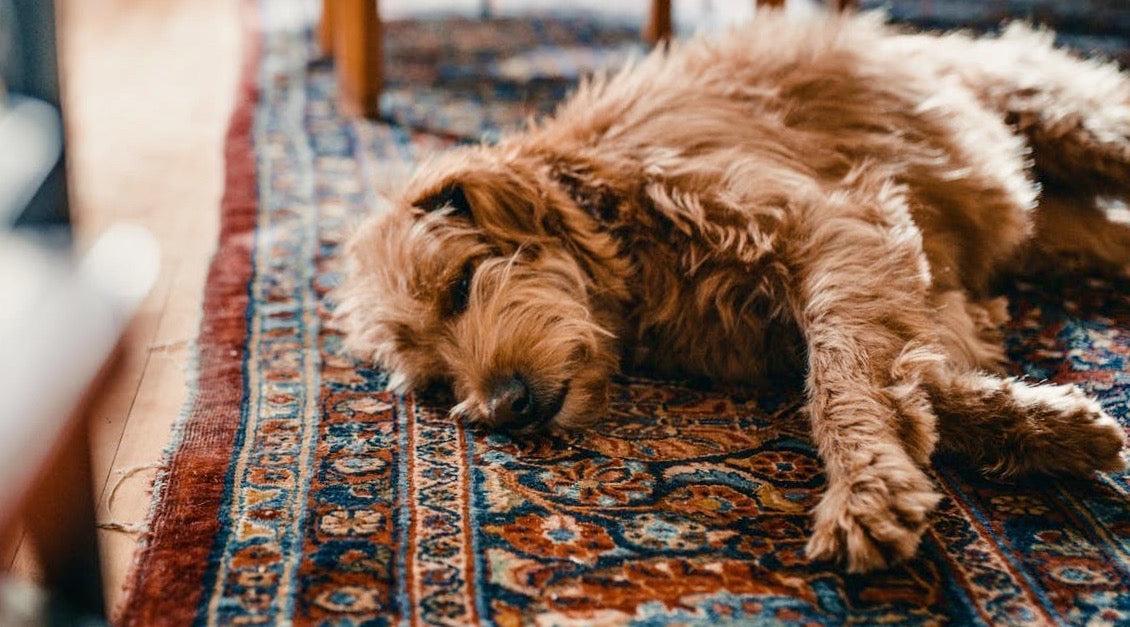

Leave a comment
This site is protected by hCaptcha and the hCaptcha Privacy Policy and Terms of Service apply.