

How Can You Tell If a Rug Is High-Quality?
When buying a rug, consumers often worry about whether the product they’re choosing is of high quality. However, this concern can be alleviated by considering the key characteristics that a high-quality rug should possess. This allows you to assess not only the rug’s monetary value but also its lifespan and practicality.
Among the thousands of rugs available on the market in various patterns, colors, and textures, quality differences may arise depending on the materials used and the weaving technique. These differences affect not only the rug’s monetary value but also its lifespan and practicality. The type of weave, yarn type, knot density, and technological features used in the product all play a role in determining a rug’s quality. Naturally, the characteristics expected from a handwoven rug and a machine-woven rug are not the same. However, at its core, a high-quality rug is one that can be used for many years, is tightly woven, and retains its color. So, how can you tell if a rug is high-quality?
Rug Texture
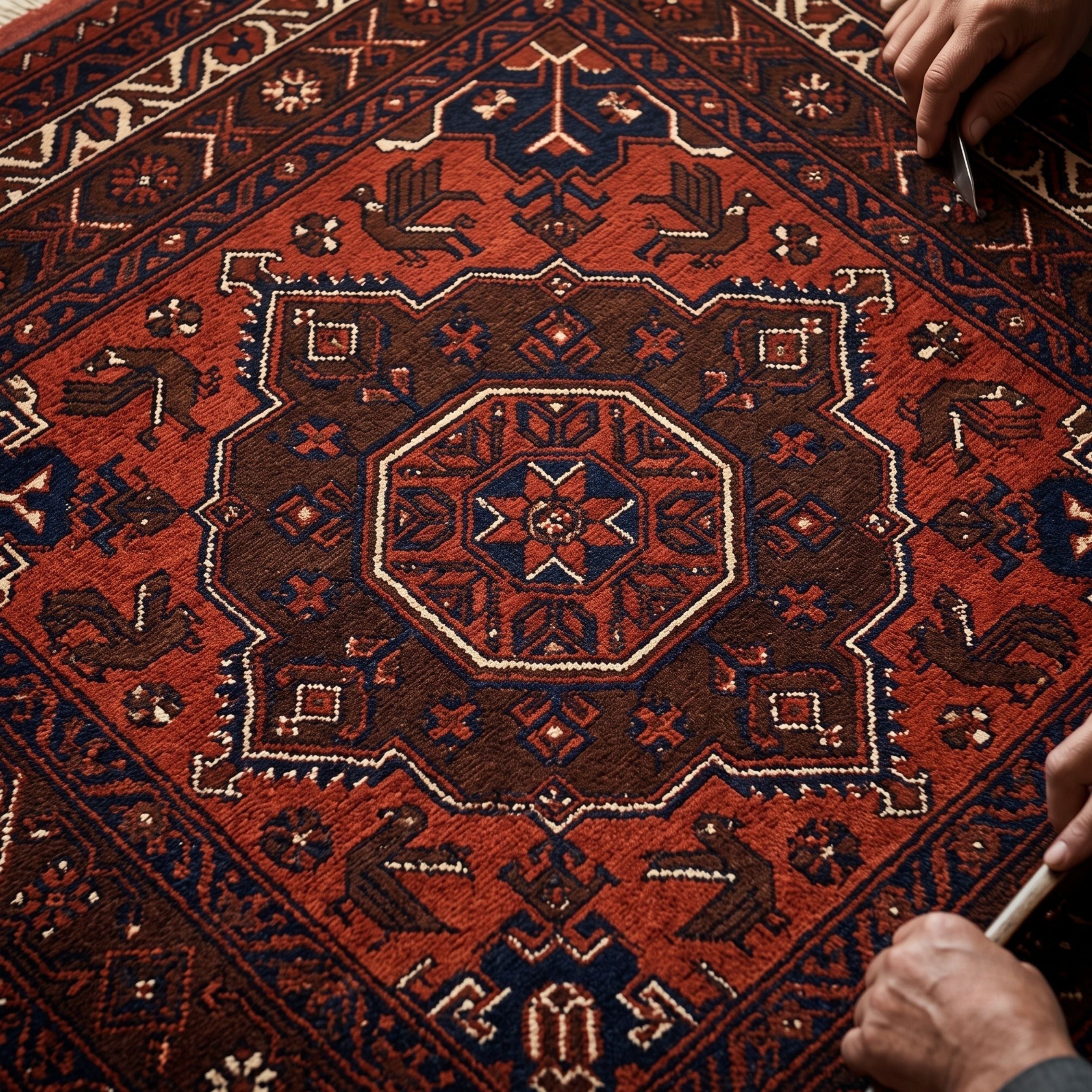
A rug’s texture is the surface reflection of the yarn structure used. The type of weave, yarn density, and yarn structure used in the rug determine its texture. In this sense, it is possible to identify the yarns and knot density specified for the rug by examining its texture. In a handwoven rug, as the number of knots per square meter increases, the rug takes on a tighter appearance, while a decrease in knots results in a looser weave. In machine-made rugs, the density and strength of the loops similarly affect the surface texture. A tighter and sturdier texture indicates a high-quality rug.
Rug Weight
As the amount of material used in a rug increases, so does its weight. In this regard, it is possible to say that of two rugs with the same dimensions, the heavier one has been woven with more yarn and is more densely woven. According to tests conducted to determine quality standards, as the weight of the yarn used in a rug increases, so does the rug’s performance. In this sense, it can be said that, among two rugs made from the same type of yarn and of the same dimensions, the heavier one is of higher quality than the lighter one.
Type of Yarn Used
The quality of a rug cannot be considered independently of the quality of the yarn used in its production. The type of yarn used for a rug directly affects the performance expected from it. Depending on the type of yarn used, a rug’s resistance to wear, staining, and color bleeding varies. High-quality rugs may incorporate valuable natural yarns such as silk and wool, as well as synthetic yarns. While woven rugs containing natural fibers are more valuable in terms of material cost, rugs made with synthetic yarns produced using advanced technology also stand out for their high performance.
Rug Knot Density
In terms of quality standards, a rug’s knot density is an important criterion for classification. Rugs with up to 100,000 knots per square meter are considered coarse; those with 100,000–200,000 are medium, those between 200,000 and 600,000 are fine, and those with more than 600,000 knots are classified as very fine quality. As the number of knots—or loops—per square meter increases, so does the rug’s weight. Consequently, the rug’s durability increases, and it provides better insulation. It also exhibits greater resistance to wear and color fading.
pile height
The part of the rug referred to as the “pile” is actually the fibers that protrude from the surface of the weave. In machine-made rugs, the pile is generally categorized into cut, loop, and raised pile types. These pile types vary in height. However, according to the rules established by the Turkish Standards Institute, a maximum pile height must be maintained during carpet production. This height indirectly determines the rug’s thickness, softness, and insulation properties. Similarly, pile height directly affects the rug’s resistance to impact and the potential loss of thickness that may occur after heavy loads.
In addition to choosing a high-quality carpet, you can read the article “How to Choose a rug Color” for detailed information on selecting the right color for your home.


Leave a comment
This site is protected by hCaptcha and the hCaptcha Privacy Policy and Terms of Service apply.