


Choosing Rugs Based on Living Spaces
Choosing a rug is a decision that reflects the homeowner’s style and influences the design and spatial quality of a living space. This is because rugs—with the area they cover on the floor, their geometry, dimensions, color, pattern, and texture—are among the most dominant elements in interior design. When paired with the right composition of wall color, flooring, furniture, and accessories, a rug completes the home’s decorative cohesion. While evaluating criteria such as weave density, yarn type, and pile height when selecting a rug, the characteristics of the space where it will be used are considered first and foremost. After all, every room in the home has its own unique function, traffic flow, and needs. Different types of rugs are required in the living room—where guests are entertained and families spend time together—in the hallway, which sees heavy foot traffic, in the bedroom, used only in the evenings, and in the kitchen, where meals are prepared and eaten. While the wide variety of rugs available may make choosing difficult, keeping certain general criteria in mind can simplify the process.
Choosing Rugs for the Living Room and Family Room
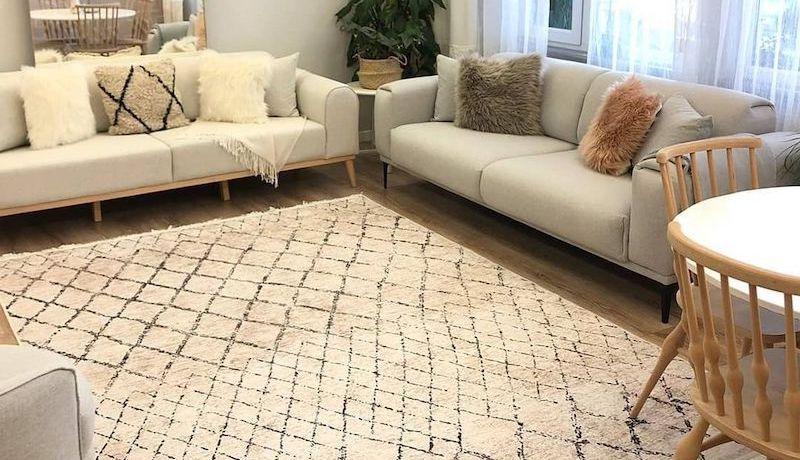
The living room and family room are the most frequently used living spaces in the home. Every decorative detail in these rooms—from the furniture to the curtains, and from the lighting to the accessories—is carefully selected. When choosing rugs for the living room and lounge, factors such as wall color, wallpaper or wall covering (if any), flooring, and furniture are taken into account. Rugs can be chosen in modern, classic, or retro styles to match the home’s overall design aesthetic. The general trend leans toward tightly woven wool, silk, chenille, and acrylic rugs that feel soft to the touch. While in the past, large rugs that covered the entire room were preferred, today it is common to use rugs that appear to “float” over the flooring. Regardless of whether you use a living room set, an L-shaped sofa, or an armchair, it is sufficient for the front legs to rest on the rug when selecting the size. Depending on the room’s size and layout, you can choose from a variety of sizes—up to 6 square meters—in solid-color, floral, geometric, or patchwork rugs. If there is a fireplace, placing a leather or plush rug in front of it can help create a warm ambiance. In a living room where the furnishings feature dense textures, patterns, and vibrant colors, opting for a simple rug helps create balance. Similarly, in a room with very minimalist decor, using a rug that makes a bold statement with its color, texture, and pattern can add dynamism to the space.
Dining Room Rug Selection
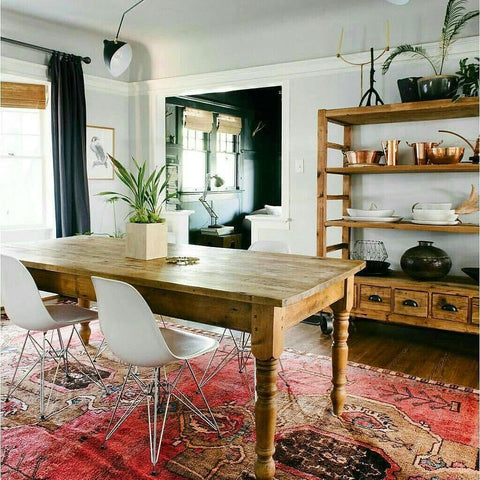
If the dining area is within the living room, using a rug that is identical or similar to the one used in the seating area creates a sense of cohesion. In homes with a separate dining room, while you have complete freedom in your choice, the selection should align with the room’s overall decorative character, taking into account the furniture, walls, and curtains. When assessing size, you should choose a rug large enough to frame the entire dining table and chairs. The geometry of the dining table and the arrangement of the chairs also determine the rug’s shape. For a dining set with chairs arranged in a circle around a round table, using a round or square rug underneath is a proportionately appropriate approach. For long rectangular tables, a rug that covers the entire set and allows for a symmetrical arrangement is the best choice. When selecting a dining room rug, it is important to choose stain-resistant, easy-to-clean synthetic fibers to ensure durability and ease of use. To prevent the rug from being crushed by the weight of the table and chair legs, models with low pile height and a tight weave can be used.
Bedroom Rug Selection

In the master bedroom, where foot traffic is minimal and every detail is carefully chosen, luxury-segment rugs are a welcome option. The warmth of wool, the elegance of chenille and silk, and the softness of shaggy-style rugs appeal to almost everyone. When deciding on the size, the dimensions of the room and the bed should be taken into account. Provided the rug extends seamlessly to the front of the nightstands on both sides, three alternative layouts are possible. The first is to center a large rug that covers the entire area under the bed. The second is to lay two long, narrow runners on either side of the bed, providing a warm, soft surface to step on when getting out of bed. The third solution, suitable when there isn’t much space on either side of the bed, is to lay a single long rug extending from the foot of the bed to the vanity table. In other rooms, if a single bed is placed against a wall, a rug can be laid parallel to it. If the headboard is against the wall and extends into the room, choosing a rug that centers the bed while leaving equal space on both sides creates a balanced look. The rug’s color can be one shade lighter or darker than the room’s dominant color. For a more detailed bedroom rug selection, the rug’s primary color can be matched to the walls, the secondary color to the furniture, and the other colors to textiles such as curtains, bedspreads, and throw pillows.
Choosing a Rug for a Children’s Room

Several criteria stand out when selecting a rug for a children’s room. Rugs that are antibacterial, hypoallergenic, easy to clean, and have a non-slip backing are healthy choices. Rugs with the right softness and thickness—allowing children to play happily with their peers or parents and move around freely—are generally preferred. Soft, tightly woven rugs featuring digital prints of their favorite characters are pieces that children also enjoy. When selecting a rug for a children’s room, cotton rugs stand out for their natural material, ease of stain removal, and even the fact that they are machine-washable. For active children who love to roll around on the floor, polyester alternatives with a slightly thicker weave can be considered. Involving children in the rug selection process helps them feel a greater sense of ownership and affection for their rooms. In addition, bamboo rugs woven from natural fiber yarn—which are known for their hypoallergenic properties—can be used in nurseries to coordinate with the room’s decor. In nurseries and spaces occupied by people with allergies, polyamide or polypropylene alternatives can also be considered.
For detailed information on recommendations and tips for selecting kitchen rugs, you can read the article “What Should a Kitchen Rug Be Like?”
Entrance Hall Rug Selection

The entryway and hallway are the areas with the heaviest foot traffic in a home. Therefore, choosing rugs with a hard surface and tight weave offers advantages in terms of durability. Stain-resistant, easy-to-clean, and non-slip rugs are a lifesaver in these high-traffic common areas. When selecting an entryway rug, the room’s geometry, the location of the coat rack, and the connection to the hallway are taken into account. In rectangular spaces, choosing a rectangular rug that leaves equal space on all sides of the walls creates a neat and polished look. In square rooms, a square or round rug placed in the center looks elegant. High-traffic round or rectangular jute rugs in cream and beige tones suit virtually any home; their natural composition makes them hypoallergenic and easy to clean. For those who prefer a softer texture, wool or acrylic rugs can be chosen for hallways. While choosing light colors can make a long, dark hallway appear brighter, wider, and more spacious, using a patchwork design can also make the space feel shorter. In addition to a stylish rug, decorating hallways with wall sconces, paintings, or picture frames helps break up the monotony.
Choosing Bathroom Rugs

Since bathrooms and toilets are damp areas, it’s best to opt for short-pile synthetic rugs. Moisture-resistant fiber options such as polyester, polypropylene, and bamboo fibers are recommended. When selecting a bathroom rug, options that are easy to clean and machine-washable offer significant advantages. Although there used to be a preference for multi-piece sets in the past, today—just as in kitchens—single-piece rugs, doormats, and kilims are preferred in bathrooms. If you have a long Hilton-style sink, a long runner placed in front of it will suffice. If the space between the shower, sink, and toilet is roughly square, a square or round rug can be chosen. Additionally, if you have a spacious balcony, veranda, or terrace, using outdoor rugs under your seating area and dining table can instantly transform the entire atmosphere of the space. As the variety of seating, dining, and barbecue sets designed for outdoor use expands, so does the need for suitable rugs and kilims to cover the floor. Balcony rugs—which completely transform the atmosphere and provide warmth in open or semi-open areas—are washable models designed to resist fading, wear and tear, water, and cold.
For detailed information on choosing a bathroom mat, you can read the article “What Should a Bathroom Mat Be Like?”



Leave a comment
This site is protected by hCaptcha and the hCaptcha Privacy Policy and Terms of Service apply.