

Kilim Motifs and Their Meanings
Since the dawn of humanity, people have felt the need to express their emotions, lives, values, ideas, daily routines, past, and dreams. People from every region and every era have conveyed these through their art, using the resources at their disposal. For the people of Anatolia, kilims—which have been woven from Çatalhöyük to the present day—serve as their canvas, and the stories they tell are hidden in the motifs woven into these kilims. Here are some kilim motifs and their meanings:

-
Scorpion Motif
Scorpion-shaped kilim motifs, woven for protection, symbolize demonic spirits. This scorpion always lies in wait to kill. It represents senseless conflict and ill intent. The people of Anatolia, who have long used a part or pattern of whatever they fear as a means of protection, also incorporate the scorpion motif into their rugs and kilims to ward off harmful creatures.

-
The Cross Motif and the Hook Motif
The plus sign and the hook are motifs frequently encountered in Turkish rugs. The plus sign motif has no connection to the Christian symbol of the cross. It is known to be used for protection against misfortune and danger.
-
The Abundance Motif
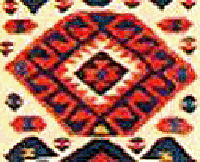
Kilim patterns known as fertility motifs can be categorized into three groups. The first group includes fruits such as pomegranates, grapes, melons, watermelons, figs, and mulberries, as well as animals such as dragons, bulls, snakes, rams, butterflies, deer, and fish, all of which symbolize boundless happiness. The second group consists of leaves, flowers, and tree motifs, which symbolize abundance and good fortune. The third group features natural elements such as water, rocks, and mountains, representing the universe, its movement, and its structure, as well as birth, death, and rebirth.

-
The Bukağı Motif

Dragon Motif
The dragon is a symbol of a giant serpent with wings, claws reminiscent of a lion’s, and a tail resembling a snake’s. It is the master of water and air and the guardian of hidden treasures. It is woven into rugs and kilims with the hope of bringing bountiful spring rains.

Hand-on-Hip Motif
The widely used “hand on hip” motif represents femininity, fertility, destiny, joy, good luck, happiness, and abundance. It is known that early humans regarded reproduction as a process belonging solely to women and were unaware of men’s contribution to reproduction; consequently, they revered and worshipped mother goddesses. The origins of this motif, which continues to be used in carpet weaving today, stem from this belief in mother goddesses.

-
Eye Motif
Eye-shaped rug patterns, woven as a precaution against the evil eye, are typically woven in blue—a color that draws attention. In kilims, this motif is frequently used with the figure’s hand on her hip, within or around the ram’s horn and fertility motifs. In addition to being used for protection against the evil eye, it also symbolizes intellectual insight, deep perception, and spiritual enlightenment—much like the “eye of the heart” and the “third eye” on the forehead of Shiva, one of the deities in Buddhism.

-
Tree of Life Motif
True to its name, the Tree of Life motif symbolizes the universe, which continues to exist through constant growth and change. Its roots, anchored in the earth, represent grounding, eternity, and stability. With its lower branches and trunk, it reaches toward the sky; with its upper branches, it reaches toward heaven, uniting heaven and earth. Trees such as the pomegranate, date palm, olive, fig, cypress, beech, cedar, oak, palm, and grapevine symbolize the Tree of Life. The birds perched on these trees symbolize the birds of life that depart when their time comes.

-
Seal and Emblem Motifs
It is known that throughout history, the Turks have used specific figures, symbols, and seals to represent concepts such as clans, tribes, states, and lineages. These seals and symbols represent the existence of a society or an individual. The purpose of this is not only to perpetuate the family name and lineage but also to protect the family’s valuable possessions. Each woven piece conveys the tools, objects, and culture of that society to future generations. Today’s logos, symbols, and pictograms are also related to this tradition.

-
Human Motifs
When the meanings of kilim motifs merge with the weaver’s emotions, they convey the current situation. Motifs featuring human figures often signify longing. In some weavings, it represents a beloved who is far away and longed for; in others, it symbolizes a daughter or son. It expresses the weaver’s longing or anticipation of a child. Additionally, it serves as a symbol of creativity and diligence.

-
Eagle Motif
The eagle, which holds an important place in Turkish history, is seen as a symbol of the sky, a harbinger of the future, and a sacred messenger carrying souls to the afterlife. Rug motifs known as the eagle motif represent agility and strength.

-
Ram’s Horn Motif
Weavers refer to this motif—which symbolizes the image of a ram through shapes such as crescents or spirals viewed from above, the side, or the front—by terms such as “ram-headed,” “ram’s head,” “ram with eyes,” or “horned flame.” The ram’s horn motif symbolizes masculinity, strength, and heroism.

-
Wolf’s Mouth, Wolf’s Trail, Beast’s Foot
The people of Anatolia sought to deal with wolves—which were regarded as companions of the gods among the Hittites—and to protect their herds from them. By crossbreeding dogs and wolves, they produced the Kangal, which they named “monster,” and kept them by their side at all times for protection. This motif, frequently used in the border between the border and the field—particularly around the mihrab section of prayer rugs—also represents optimism and protection.

-
Bird Motif
In Anatolia, the symbol of the bird is widespread in virtually every aspect of life. The bird’s wing, feather, eye, beak, claw, and even bone are used for various purposes. Bird motifs sometimes symbolize the soul of a deceased person, and at other times, a beloved, love, or a woman.

-
Earring Motif
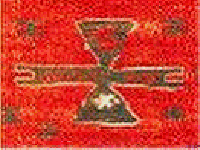
The earring motif, often woven by young, unmarried women, is a way for the weaver to indirectly convey to her family her desire to marry. It represents young men and women starting a family and sexuality.
-
Amulet Motif
Woven to ward off the evil eye, the amulet motif resembles a triangular eye. It is woven with the intention of protecting against jealous gazes—using an eye to ward off the evil eye.

-
Thistle Motif
People in Anatolia believe that the thistle, a prickly field plant, wards off the evil eye with its thorns, and they weave the thistle motif into rugs for this purpose.

-
Hair Tie Motif
In the hair tie motif, hair symbolizes immortality. The weaver indirectly expresses a desire to marry, have children, and remain with their beloved until death.

-
Chest Motif
Turkish rug motifs representing the chests where young women of marriageable age store their dowries serve as a way for the weaver to indicate that her dowry is ready.

-
Waterway Motif
Water is one of life’s most precious elements. Consequently, the kilim motifs adorned with the “Waterway” pattern by the people of Anatolia, along with their meanings, embody life, vitality, abundance, purity, renewal, and rebirth. In addition, they symbolize virtue, wisdom, and nobility.

-
Comb, Finger, and Hand Motifs
Motifs resembling combs, fingers, or hands are geometric patterns woven in groups of seven, five, and three. They are essentially composed of rods extending from a central body. Hands represent the creative power of humanity. The people of Anatolia use the hand motif in a style that is sometimes realistic and sometimes symbolic, employing lines and dots.

-
Snake Motif
The snake motif, which appears in weavings in the form of zigzags, dragons, or clouds, symbolizes power and immortality. In Anatolia, the snake—regarded as sacred—is both feared and revered. The two-headed snake, on the other hand, is known as a symbol of medicine and represents the unity of poison and antidote.

-
Star Motif
The meanings behind star-shaped kilim motifs—which represent diligence and productivity—lie in the weaver’s desire to express that they, their family, and themselves are hardworking and diligent.

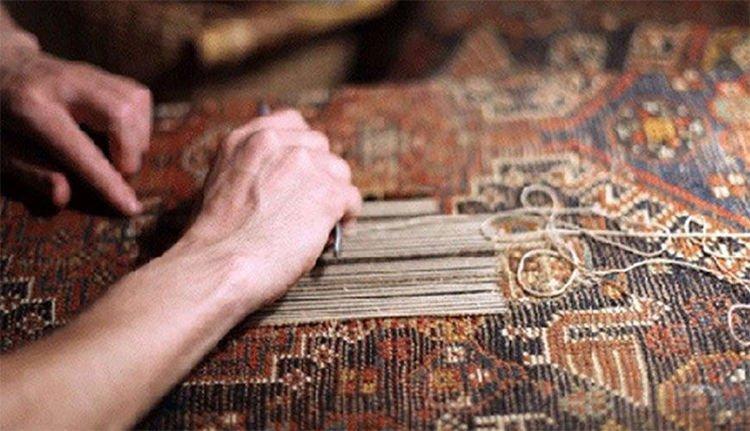
Weaving has been one of the most important sources of livelihood for the Turks, who led a nomadic life for much of history. Rug motifs are among the symbols of ethnic rug designs, woven not by chance but with deep meanings.In this traditional craft unique to Turkish culture, every knot tied is a line of poetry written by the weaver. By recognizing, understanding, and using these motifs, you can pass on this unique tradition to future generations.
Be sure to check out our article on rug patterns to learn more about popular rug designs and their uses.
Source: meb-kilim-motifleri


Leave a comment
This site is protected by hCaptcha and the hCaptcha Privacy Policy and Terms of Service apply.