

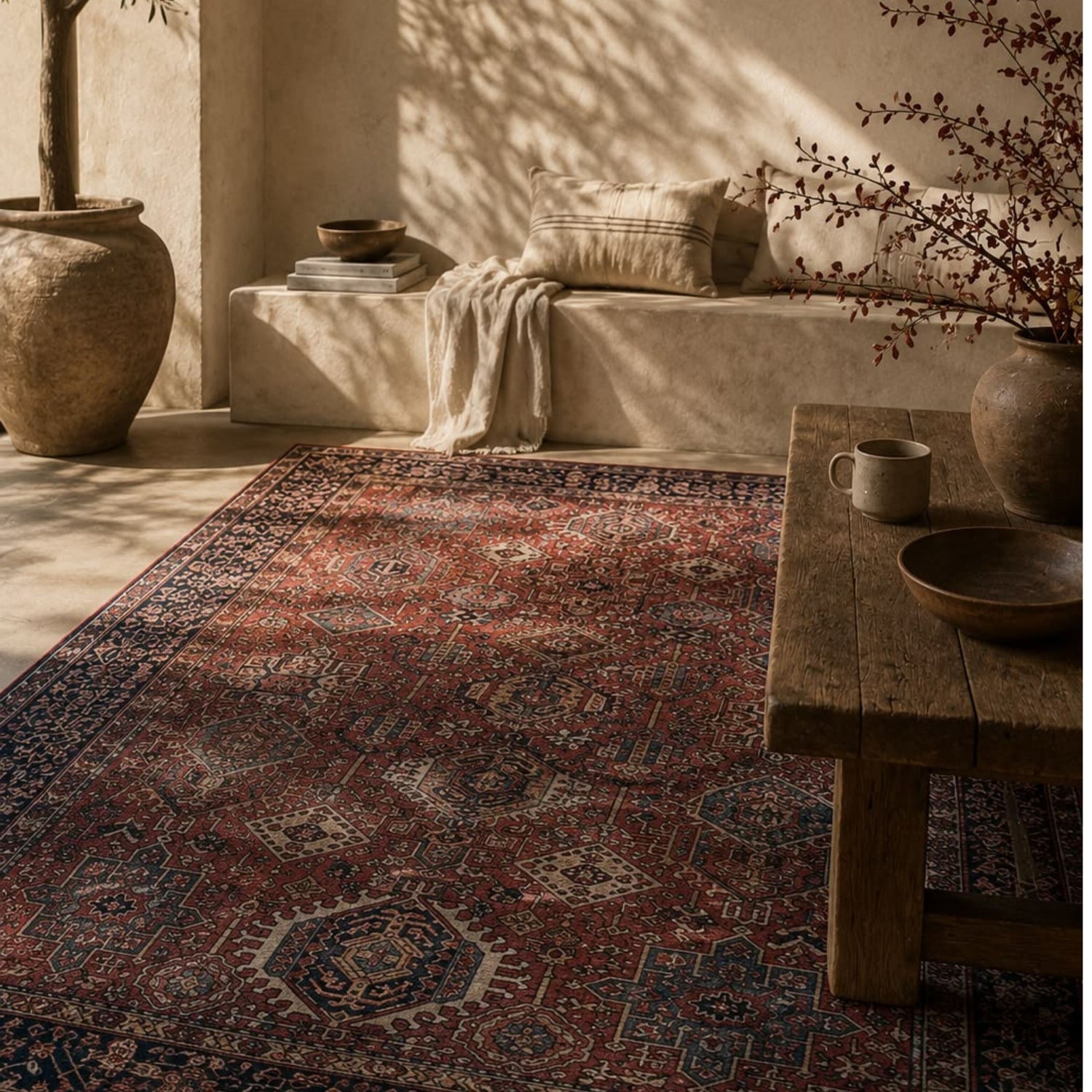
Iranian rugs have been a symbol of luxury and comfort for centuries. Their intricate patterns and vibrant colors make them the focal point of any room where they are used. Preferred for decorating a wide range of living spaces—from homes to offices—Iranian rugs bring warmth and beauty to any setting. What makes these rugs durable enough to last for generations is their construction from a combination of natural fibers such as hand-spun wool, silk, and cotton. The unique patterns found in Iranian rugs are often inspired by nature or traditional motifs representing different aspects of life. With their timeless beauty, Iranian rugs are rare treasures that never go out of style. Iranian rugs are highly sought after for their beauty and durability, making them an excellent choice for any space. Whether you’re looking to add a touch of elegance or simply seek comfort, you can be sure these rugs will bring warmth and coziness to your home.
History of Iranian Rugs
Iranian rugs are a beautiful art form that has existed for centuries. The Iranians, considered the first rug weavers of the ancient world, created the oldest known rug, called the “Pazyrik.” Discovered in the frozen tomb of a Scythian ruler in Siberia, this rug dates back to the 500s BCE. Currently on display at the Hermitage Museum in St. Petersburg, this rug is recognized as the world’s oldest. The first documented reference to Iranian rugs dates back to the Sasanian period, between 224 and 641 CE. Chinese texts mention Iranian rugs. However, Greek historical inscriptions also speak of the existence of these rugs, their quality, and their great value.
It was Shah Abbas the Great who brought Iranian rugs to worldwide recognition. Although rugs had been sent from the Ottoman Empire to Europe prior to this period, Shah Abbas’s reform movements led to a significant increase in interest in the region—and consequently, in its rugs. Iran, having become a pioneer in carpet weaving, was able to distribute the rugs it wove to the entire world as trade continued to develop. So much so that patterns from Iranian rugs have appeared in the paintings of famous artists, the books of writers, the decor of fashion magazines, and the clothing of artists. From royal palaces to family homes and museums all over the world, Iranian rugs continue to be admired even today for their beauty and craftsmanship.
Characteristics of Iranian Rugs
Iranian rugs are renowned for their intricate designs, beautiful colors, and luxurious textures. For centuries, they have been used to decorate homes and add elegance to any room. They are designed in a variety of shapes, sizes, patterns, and colors, making them perfect for any home. Each rug is handwoven with great attention to detail to ensure the highest quality. Iranian rugs, which bring beauty to any space, feature a wide range of details, from traditional designs to modern motifs. The characteristics and quality of Iranian rugs, which are quite complex to weave, vary depending on the region where they are woven. Each rug features a unique design passed down from generation to generation, making every one special in its own way. Antique Iranian rugs, in particular, are as unique as a fingerprint. The knotting
method, knot density per centimeter, materials used, and design all contribute to this unique “fingerprint.” The diverse patterns and styles of antique Iranian rugs are particularly striking. This sets them apart from other rugs within the Iranian rug price range. The price of an antique Iranian rug is slightly higher than that of other hand-woven rugs. For this reason, Iranian rugs are viewed by some as an investment.
Iranian Rug Colors and Patterns
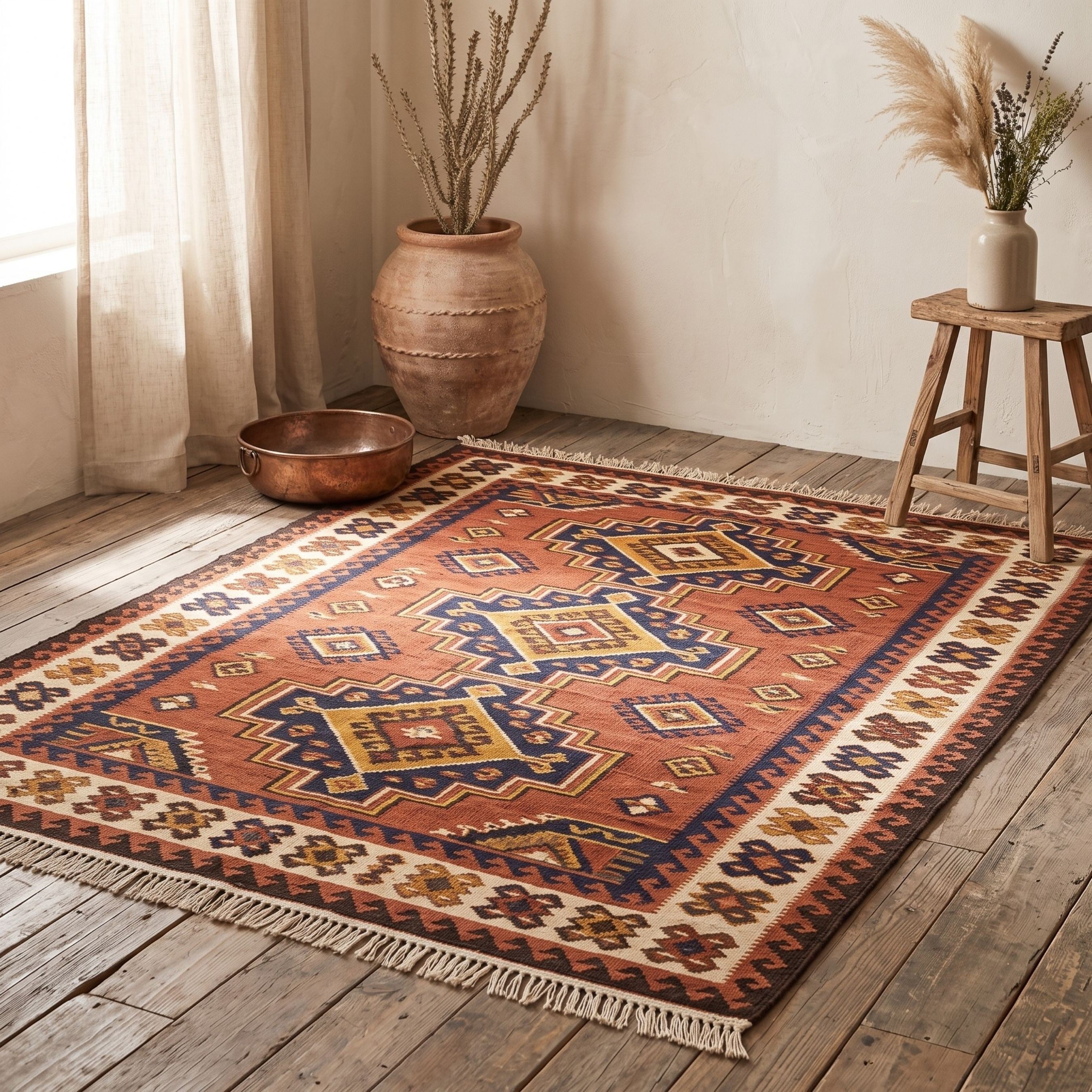
Iranian rugs are known for their intricate patterns and vibrant colors. These rugs are typically characterized by bright colors and complex designs that reflect both Iran’s culture and history. Iranian rugs feature a variety of colors—ranging from pale blue to deep red and green—as well as various geometric patterns such as diamonds, medallions, stars, and floral motifs. Graphic and abstract patterns can also be seen in the rug motifs. In Iranian culture, each color has its own unique symbolism. For example, blue symbolizes water, while red symbolizes fire. The beauty of these rugs lies in their ability to bring together different elements of Iranian culture into a striking work of art.
How Are Iranian Rugs Made?
Known for its intricate designs, colors, and craftsmanship, the production of an Iranian rug is an intensive process that requires skill, patience, and dedication. It involves several steps, such as spinning the yarn, dyeing it with natural dyes, weaving the desired pattern on a loom, and finishing it with a complex knotting technique. Because it requires such extensive effort, completing an Iranian rug can take anywhere from a few months to several years. This process depends on the rug’s quality and size.
How to Identify an Authentic Iranian Rug?
Iranian rugs are known for their exquisite craftsmanship and intricate designs. However, with so many counterfeits on the market, it can be difficult to tell the difference between a genuine Iranian rug and a fake one. Fortunately, there are several ways to identify an authentic Iranian rug. Knowing how to identify specific characteristics, such as the quality of the fabric and the weave pattern, can help you distinguish between a genuine and a counterfeit Iranian rug. Here are
from a fake, here are some features to look for:
- Every Iranian rug is unique. Even if woven by the same person, it is impossible to create two that are 100% identical. Therefore, you should check whether the rug exists in different sizes and quantities.
- The fringes of Iranian rugs are not sewn on. The ends of the warp threads form tassels and are an integral part of the rug. If the fringes are sewn on, it indicates that the rug is not authentic.
- In machine-made rugs, the patterns are symmetrical. In original, handwoven Iranian rugs, there is no symmetry. An irregular and imperfect rug is authentic.
- Iranian rugs are made from cotton, silk, and wool. In non-original rugs, synthetic fibers are used to reduce costs. The back of the rug should be inspected carefully to determine whether synthetic materials have been used.
- A high-quality Iranian rug has a high knot count. Iranian rugs with a low knot count may not be authentic.
- Authentic Iranian rugs use special plant-based dyes. Made from various plant and animal materials, these dyes are fade-resistant. To test the rug, place a damp cloth on one corner of the rug and wait a few hours. If any color bleeds or mixes onto the cloth, the rug is not authentic. Additionally, the absence of color on the rug also indicates that plant-based dyes were used.
With this information, you can be confident that you are investing in a unique work of art that will last for generations. By browsing the Iranian rugs in Apex’s collection, you can discover a variety of stylish options that you can enjoy for many years to come.
Cleaning Iranian Rugs
Iranian rugs are delicate products that require special care when it comes to cleaning. Iranian rugs are typically made of wool or silk and require a specialized cleaning method to preserve their beauty. Traditional methods such as hand washing and dry cleaning can be used to clean Iranian rugs, but they must be performed carefully to avoid damage. Specialized cleaners can be used for a more thorough cleaning. Knowing the correct techniques is very important for preserving the beauty of an Iranian rug. If the rug cannot be taken to a professional cleaning company on a regular basis, the cleaning process can be carried out by following the steps below:
- Vacuuming should not be done too frequently, as it can damage the rug’s fibers. To prevent the fibers from loosening or becoming damaged, vacuum with an electric vacuum cleaner once every two weeks, moving back and forth without going against the grain of the fibers.
- One of the most effective ways to remove dust is to shake out the rug rather than vacuum it. Therefore, with some help, the rug can be shaken out at regular intervals. Do not beat the rug while shaking it, as this can also damage the fibers.
- If the dust-removed carpet is to be washed, cold water, carpet shampoo, or liquid soap should be used at this stage. Cold, clean water is applied to both sides of the rug. This can be done using a garden hose. After rinsing, apply soap and begin rinsing with a long-bristled brush. This process should also be done in the direction of the fibers. Rinse the rug by spraying water on it, then let it air dry.
- Allowing the rug to air dry and ensuring it is completely dry prevents mold growth. Therefore, on a sunny day, the rug should be turned over to air out both sides. However, it should not be exposed to direct sunlight.
- Stains spilled on the rug can be removed immediately by blotting with a damp or soapy cloth. However, for stubborn stains, professional help should be sought without delay.
- Since cleaning too frequently can damage the rug, it should only be cleaned when it is stained or appears dirty.
- Steam cleaning is not recommended for Iranian rugs, as it can cause the rug to lose its tension.

Leave a comment
This site is protected by hCaptcha and the hCaptcha Privacy Policy and Terms of Service apply.