


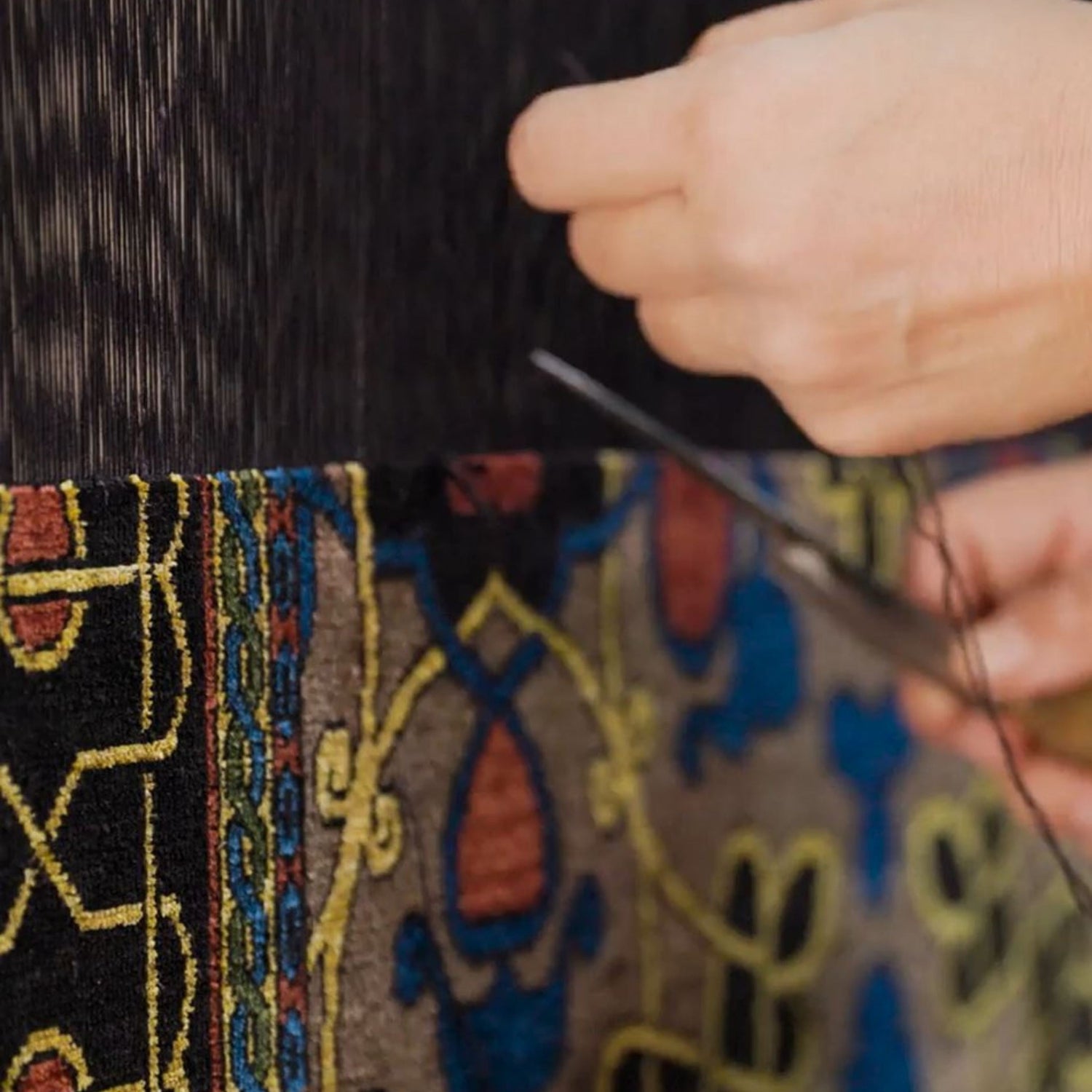
Silk rugs are among the most unique and valuable types of rugs. Woven from silk—a material that is quite difficult to work with due to its delicacy and elegance—these rugs are highly prized for both their craftsmanship and materials. In fact, some special silk rugs are even considered works of art. The percentage of silk used in the rug, the rug’s size, the density of the patterns, the knotting techniques employed, and the number of knots per square meter are all factors that determine the rug’s price. Bamboo silk rugs, on the other hand, are among the favorite choices for those who want to experience the delicate and elegant texture of silk in their homes.
What Is a Silk Rug?
Silk rug weaving is a tradition that has been carried on for many years. Since its introduction into weaving, silk has found its place in the art of rug weaving and stands out as a material that is quite difficult to work with. Since weaving large-scale rugs with a valuable and delicate material like silk requires a special level of craftsmanship, handwork plays a major role in these rugs. Today, with advancing technology, silk rugs are produced not only by hand but also on digital looms. In addition to pure silk rugs, blends containing silk with enhanced durability or bamboo yarns that mimic the feel of silk are frequently used in weaving. These bamboo rugs, which are easier to work with than silk and more durable for everyday use, are also sold at more affordable prices compared to organic silk rugs. Bamboo rugs, the preferred choice for those seeking to add an elegant yet practical touch to interior decor, stand out for their silky texture.
What Are the Differences Between Silk and Wool Rugs?
Silk and wool are quite different in structure as materials. While silk is a delicate and difficult-to-work-with material, wool is a durable raw material that is easier to shape than silk. Silk rugs are known for their delicate structure compared to wool rugs. While a rug woven from silk can easily lose its shape in environments with heavy foot traffic, wool rugs stand out for their durability. Since silk is a rare raw material obtained through difficult and lengthy processes, it is more expensive than wool. Wool, on the other hand, is a material easily obtained from sheep and is available at affordable prices. For this reason, there is a price difference based on the material between wool and silk rugs. In weaves that combine silk and wool, it is possible to achieve both durability and elegance.
How Are Silk Rugs Woven?
Silk is one of the most challenging materials used in carpet weaving. The thread’s delicate structure and the difficulty of tying knots with it are key factors that enhance the rug’s value. Silk rugs are woven only on looms specially designed for them. With approximately 1,000,000 knots per square meter, these rugs are crafted over a long period of time with great skill, patience, and hard work. The knots used in silk rugs also differ from those in other rugs. In particular, the closed knot—known as the “Turkish knot”—is among the most difficult and renowned types of knots. Differences can also be observed in the knots used depending on the various carpet designs and motifs. However, traditional patterns are generally featured in silk rug designs. Depending on the rug and pattern being created during the weaving process, wool or other types of yarn may also be used. This affects not only the rug’s cost and retail price but also its durability and the setting in which it will be used.
For more detailed information about carpet weaving, you can read our article “The Art of Rug Weaving: How Is a rug Woven?”
How to Clean a Silk Rug?
Cleaning handwoven silk rugs requires great care. Rugs made exclusively of silk are particularly sensitive to moisture and impact. Therefore, mistakes made during the cleaning process can cause permanent and irreversible damage to the rug. Before cleaning, the rug must first be gently vacuumed to remove any dust. While vacuum cleaners can be used for this process, specially designed brushes are also a good option. To deep-clean the rug, wipe it with a clean, dry, and soft cloth in the direction of the pile. The next step after wiping is to air out the rug in a shaded area. It is recommended to seek assistance from professional companies to ensure the cleaning is done correctly and to prevent damage to the rug during the process.
For more detailed information on carpet weaving, you can read our article “The Art of Rug Weaving: How Is a rug Woven?”


Leave a comment
This site is protected by hCaptcha and the hCaptcha Privacy Policy and Terms of Service apply.