


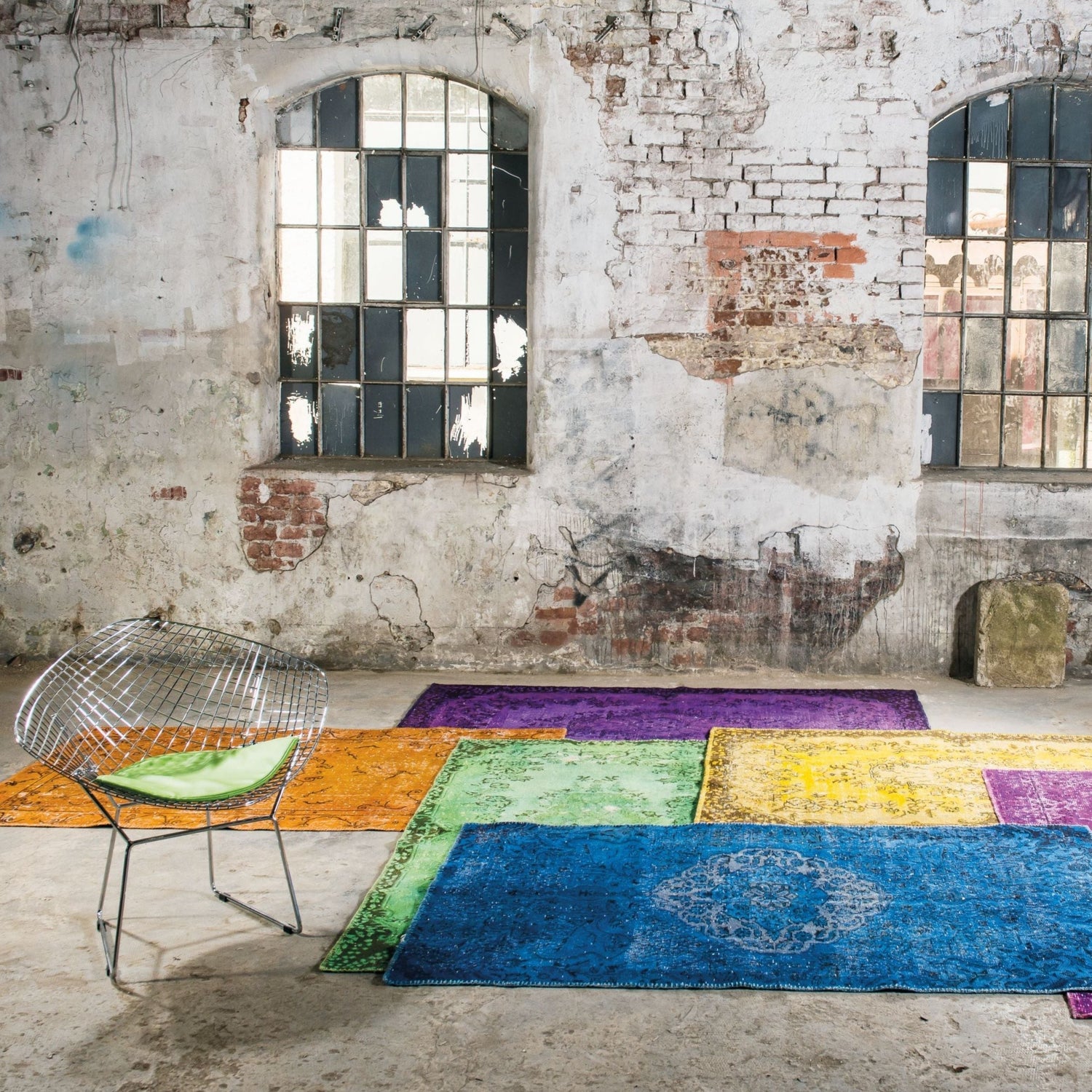
Although the term “antique” typically brings to mind items with a history of at least 100 years, there are various factors that determine a rug’s antique value. If you’re looking for an antique rug—whether for a collection or for everyday use—you should pay attention to these characteristics. The rug’s age, origin, the yarn and dyes used, its condition, quality, weaving technique, and dimensions must all be appropriate for an antique piece. In addition to all of these, rarity is also one of the factors that determine the value of an antique rug. The fact that a rug has no exact duplicate or similar counterpart—and every detail, from the pattern to the technique used—is related to its rarity and value. As you learn about the history of antique rugs, you’ll gain a much better understanding of the source of this value.
The Unique Stories of Antique Rugs
Although antique rugs and kilims are produced in many regions where cattle are raised, the most popular ones were produced in Turkey, the Caucasus, the Middle East, and Iran, and from there spread throughout the world. They are distinguished by their varying weaving techniques, patterns, and colors, which differ depending on the era and region. Turkish rugs, which have inspired admiration for years with their pastel colors; Iranian rugs, where large, dense weaves meet deep hues; and Caucasian weaves with their myriad geometric shapes are among the most beloved. Rugs woven in every region are, in fact, a reflection of that culture. For this reason, the motifs and colors of antique rugs—recognized as ethnographic artifacts—are unique to their regions. Rugs, which nomadic tribes initially produced to wrap their belongings and protect their tents, have over time become an indispensable household item. Every weaver incorporates motifs and colors that reflect their culture into the pieces they create. The lifestyle of clans and tribes, along with the style of their woven textiles, offers a way to understand their origins. Family symbols, clan marks, birds—each carrying a different meaning—and various animals all tell a story through the weaving.
The Origins of Antique Rug Types
Antique rugs and kilims are named after the region where they were produced. However, determining the exact place of production is not always easy. Generally, the materials used, along with the colors and patterns, help identify the piece’s origin. For example, Iranian rugs are woven using a blend of wool, cotton, and silk. Symmetrically designed patterns and flawless curves are among the most distinctive features of these rugs.
Turkish rugs are typically made using the Gördes knot, while Iranian rugs are made using the Sine knot. Turkish knots are larger than those found in Iranian rugs. The larger size of the knots results in patterns that are more angular and defined. Rugs of Caucasian and Middle Eastern origin feature vibrant colors, while European rugs typically display floral patterns. Medina rugs, on the other hand, are works that lack figurative elements and do not follow a symmetrical design.
The Prehistoric Period of Antique Rugs
It is believed that carpet weaving actually developed on the steppes of North and Central Asia as a method devised by nomads to protect themselves from the cold. It is believed that the first rugs, woven from sheep and goat wool to keep the interiors of tents warm, were also used as kilims for decorative purposes. Although the oldest remains of this portable and practical household item date back to around 7000 B.C., the earliest known example is the “Pazyryk Rug” from the 5th century B.C. For this reason, it is believed that rugs and kilims have been in use for at least 4,000 to 5,000 years.
Found inside a kurgan in the Altai Mountains, the Pazyryk Rug is a rare example with its rich colors and symmetrical patterns. Although there has been debate about its origins because the rug’s patterns resemble motifs found in the ancient city of Persepolis, it has been determined that it was easier for Eurasian nomads to obtain natural dyes and yarns.
The Place of Antique Rugs in Art History
In art history, rugs are valued not only on their own but also in relation to other works of art. From their patterns to their colors, many elements of a rug are used to understand the ethnic, cultural, and sociological structure of the era and to identify interactions. You can even see Turkish or Iranian rugs in many famous Renaissance paintings that you view today. For this reason, art history does not treat the rug merely as a work of art. Even the rugs used in paintings and miniatures tell a story and provide valuable insights.
Antique Rugs and Cultural Change
To understand a culture, one must first look at its works of art. The story of rugs and kilims woven on handlooms is also one of the most obvious ways to understand a culture. Even two cities—or even two villages—that are very close to one another have their own distinctive patterns and traditions passed down through generations. For this reason, to trace culture across neighboring countries or even geographically isolated regions, one looks at the characteristics of the rugs.
When an identical pattern is widespread in two countries that are unaware of one another, this suggests a collective consciousness rather than direct interaction. In regions that have had the opportunity to interact in some way with nomads and merchants, the traces of culture can be traced. As years pass and regions change, culture evolves along with people’s way of life and possessions. Artifacts produced according to the fashion of the era take on distinct forms.
Restoration and Preservation of Antique Rugs
To preserve antique rugs and pass them down through generations, restoration must be carried out by experts. Rugs of cultural and historical value are restored using the correct techniques to ensure they remain true to their original form. Skilled artisans and restorers, experts in their field, undertake this work with meticulous craftsmanship. The threads, weaving technique, natural dyes, and colors used in the rug’s original form are first analyzed. Then, restoration processes are carried out in a manner faithful to the original, preparing the rug for use.
The fact that the value of antique rugs went unrecognized for many years is the reason why so many pieces are in poor condition today. Through the “kırkyama” project launched in recent years, valuable pieces that are beyond repair are collected from various provinces across Turkey and brought together. These pieces are pieced together using the “kırkyama” technique, restored, and sold abroad at their true value.
Antique Rug Markets and Collecting
For collectors seeking valuable and rare items, the markets established specifically for this purpose serve as the go-to destination for acquiring antique rugs. Antique rug markets feature pieces from many different regions, such as Iran, Bünyan, Hereke, Isparta, and the Caucasus. If you want to become an antique rug collector, you should know the following:
- Iran’s famous Kerman, Isfahan, Tabriz, and Kom rugs each have their own distinctive characteristics. Isfahan rugs are extremely detailed, Kerman rugs feature floral patterns, and Kom rugs are made of silk and are rare. Thanks to their superior weaving technique, they stand out the moment you touch them.
- Original Turkish rugs use natural plant-based dyes—primarily deep blue, red, and brown—along with wool (and in some cases, silk and cotton) yarns. They feature geometric and botanical patterns that bear the influence of Roman, Byzantine, and Seljuk styles.
- Although pre-Ottoman period rugs were woven from thick yarn, those from the imperial period feature finer yarn. The edges of the rugs may include “fringe,” which consists of hanging strands of yarn.
- Most Middle Eastern rugs are produced in Afghanistan, in addition to Iran and Turkey. Caucasian rugs are manufactured in Armenia, northern Russia, and Azerbaijan. European rugs are generally delicate items, such as bedspreads and wall hangings, that were imported during the Renaissance, Baroque, and Rococo periods.
Appraising Antique Rugs
For an old rug to possess antique value, it must be made from natural fibers dyed with natural dyes and handwoven on a loom. Mass-produced rugs, therefore, do not possess antique value even if they appear antique. The rug’s weave, quality, and unique characteristics—which are rarely found in other pieces—enhance its value. Therefore, a rug’s age alone is not sufficient to qualify it as an antique. A high-quality product crafted by master artisans can be priceless, even if it is not particularly old.
If you’d like to own a handwoven rug that will gain antique value over time, explore the Apex Rugs vintage collection. With handwoven pieces that gain value as they’re passed down through generations and vintage patterns, you can bring the look of an antique rug into your home.


Leave a comment
This site is protected by hCaptcha and the hCaptcha Privacy Policy and Terms of Service apply.